Showing posts with label French. Show all posts

Tuesday, January 11

Around the world in 64 sentences - part 2


We were on a world tour in 64 sentences when suddenly the journey stopped. You must have heard that several airports including London and Paris were blocked because of heavy snow-fall. So I blame this long interruption on snow too. Thanks Santa claus you sent the snow when I needed it. We were in the middle of the ‘to’ crisis, how many ‘to’s are there in French? We have already seen some ‘to’s for a country,continent and a city(Lesson December 5). Let’s rewind a bit.

1.City:

Preposition ‘à’

Je vais à Paris. Tu vas à Mumbai.

2.Country/Continent:

Preposition en’ used for the feminine countries.

Je vais en France. Je vais en Inde.

Time to tackle the masculine side of the world. What are the masculine countries?

Le Portugal, Le Brésil, Le Canada, Le Japon, Le Cameroun, Le Costa Rica.

Preposition ‘au’(à+le = au) used as ‘to’ for a country that has a masculine name.

Je vais au Portugal. (Literal translation would be ‘I am going to the Portugal’ but correct translation would be ‘ I am going to Portugal’)

Tu vas au Japon. Ils vont au Brésil.

je vais

tu vas

il /elle va

nous allons

vous allez

ils/elles vont


au

Portugal

Brésil

Canada

Japon

Cameroun

Costa Rica

I would suggest not to go to Canada because there must be a freezing winter, Brazil is a good choice and very soon it’s carnival time. Stop for a sushi in Japan if you have some time.

Our next break would be at the white house for lunch before leaving for tea time at Queen's castle in UK. Would you like to accompany me? then keep checking the schedule of this amazing journey.


Sunday, December 5

Around the world in 64 sentences


Last time Sherlock Holmes helped us to solve the mystery of pronominal verbs but who is going to take us on a tour to the planet ‘to’? home to many ‘to’s. How many are there? You have to choose a ‘to’ for a city, one for a country and another for a discotheque or a movie theater! List is long but not endless.

1.City:

Preposition à


Je vais à Paris. Tu vas à Mumbai.


2.Country/Continent:

In French everything has a gender so the countries are divided not in continents but in masculine and feminine genders. The countries given below are on feminine side, India, Italy or France seems to have some feminity but I don’t understand why Great Britain and Spain are feminine ? We can even organise a debate on this issue!


La France, La Suisse (Switzerland) , La Grande Bretagne (Great Britain), L’Inde(India), L’Italie(Italy), L’Espagne (Spain), La Chine(China)


All the continents are feminine :

L’Asie, L’Afrique, L’Amérique du nord , L’Amérique du sud, L’Europe, L’Australie and L’Antartique


Preposition En (ɑ̃)

En is used as ‘to’ for a country or a continent that has a feminine name. Literal meaning of ‘en’ is ‘in’ but here it is ‘to’.


Je vais en France. Je vais en Italie.

Je vais en Inde. Je vais en Grande Bretagne.


je vais

tu vas

il /elle va

nous allons

vous allez

ils/elles vont


en

France

Inde

Espagne

Italie

Grande Bretagne

Suisse

Australie

Chine


You can make at least 64 sentences with the help of this table. Enjoy the tour around the world in 64 sentences! Journey continues in next lesson.


Friday, December 3

Let it snow let it snow let it snow


Triple A’s journey continue on the TGV tracks to Brest. It’s snowing heavily and they are stranded in 30 cms of snow at Lamballe. What do we do when there is nothing to do? Either we watch TV, eat or talk. Don’t we? Well! there was no TV and the food is so expensive in TGVs so Triple A and the Bretonne lady preferred to talk.

Nolwenn: Où allez-vous?

Amrita: Nous allons à Brest. Et vous?

Nolwenn: C’est une jolie petite ville. Je vais à Morlaix.

Anita: Est-que c’est une grande ville?

Nolwenn: Non, c’est une petite ville.

I will ask you to wait for a minute and try to understand the dialogue above because you are familiar with half of the vocabulary and half is new. Let’s see these examples.

Je vais à Paris.

Je vais à New-York.

Je vais à New-Delhi.

Nous allons à Rome.

Do you now have an idea what was the dialogue about? I am sure you understood. Here is the English version. I don’t like the translation but here it’s difficult to teach just by examples. Keep it in mind that English and French have lot of common words but the grammar is totally different. If you try to make a sentence then make it using whatever knowledge you gained in French please do not translate otherwise everything will be messed up.

Nolwenn: Where are you going?

Amrita: We are going to Brest. And you?

Nolwenn: It’s a beautiful small city. I am going to Morlaix.

Anita: Is it a big city?

Nolwenn: No, It’s a small town.

The new verb I introduced is ‘Aller’ that means ‘to go’. ‘Aller’ is one of the most common verbs used in French so you must learn by heart the conjugation.

Aller = to go


Je vais

Tu vas

il/elle va

Vous allez

Nous allons

ils/elles vont

à

Brest

Paris

New-York

Mumbai

What is this strange letter doing in the middle column? ‘à’ is equivalent to the preposition ‘to’. It is pronounced as ‘a’ in ‘art’ ‘dart’ or ‘part’. In French there are more than one ‘to’, different ‘to’ for different places, ‘à’ is used for cities. It’s getting complicated? No not at all it just a question of keeping your memory updated. Remember only one ‘to’ for the moment that is ‘à’.

New vocabulary

Aller = to go

où = where (Pronounced as oo in too)

Petit(masc.)/Petite(fem.) = Small, tiny

Tuesday, November 30

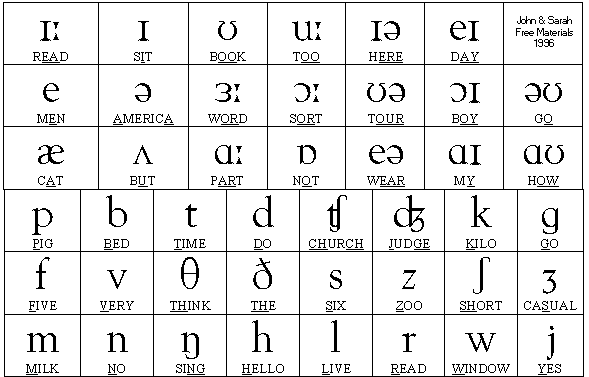
Phonetiks is fantastik


Hi all! I am sorry this is not a new lesson as I was busy working on a small glossary of all the words that came in last eight lessons. Hindi is my national language, people say that it is difficult to learn but in my opinion it's one of the most easiest languages to learn or atleast to read. Once you know all the alphabet and accents you can read without any problem because we read as it is written. There are no irregular rules as in English and French that is why it is an excellent way to learn French pronunciation. I am sure this French-Hindi glossary will be a huge help for my Hindi speaking readers. You can find it on the 'French-Hindi' page. I would be very happy to know if there is a blog specialist who can help me how to record an audio file and upload it with a blog post.

Monday, November 22

Sherlock Holmes solved the mystery

We are going on a mystery adventure, you must be equipped with all the arms and weapons and should know how to use them . These arms are pronouns, articles, questions and all the vocabulry we learnt in seven lessons. Do you know by heart the use of all these? If no then please go through all the previous lessons, you can find them under the label of ‘French’ at the right hand side. You must be wondering what happened to the ‘Triple A’ team? Where are they? What are they doing? Well! Anita,Amrita and Amandine three students from Paris are still on TGV talking to Nolwenn the ‘Bretonne’ lady. The people from the region of Brittany or Bretagne are called ‘Bretons’, ‘un Breton(masc.)’, une Bretonne(femi.).

Last time Nolwenn asked the names of the three girls 'Comment vous vous appelez?' Every time this question and the answer to this question made me scratch my head. It was a big mystery for me when I was learning French because there was always an apostrophe or some pronoun appeared two times like in the question above.

Comment tu t’appelles?

Comment elle s’appelle ?

Comment elles s’appellent ?

Comment il s’appelle ?

Comment vous vous appelez ?

Je m’appelle Anita.

Elle s’appelle Amrita.

Elles s’appellent Anita et Amrtia.

il s’appelle Brad Pitt.

Je m’appelle Aung Saan Suu kyi.

Those were my very first lessons when I was struggling to adapt myself to French-French learning method, my French teacher told me that I will understand ‘Vous vous appelez’ later on and not to worry about it. My condition was getting worst I could not sleep at night and felt myself hanging on an apostrophe too, so I had to find the answer. I solved the puzzle by translating word to word this question. In French they don’t ask or tell a name like in English ‘What is your name?’ but they say ‘ How you call yourself?’ and the answer is similar too, I call myself Anita, How she calls herself? She calls herself Amrita, How they call themselves? Etc. Etc. The verb used here is s’appeler , this type of verb is called a pronominal verb where the subject performs an action on itself. Ex. Elle s’appelle Angelina –She calls herself Angelina. There are many more pronominal verbs to come but for right now we will not go in too much technical details. Enjoy remixing and matching!

s’appeler


Je m’appelle

Tu t’appelles

Vous vous appelez

il s’appelle

Elle s’appelle

Anita, Amrita,Amandine,

Brad Pitt

Angelina Jolie

Tuesday, November 9

Who is Brad Pitt?


Anita, Amandine and Amrita or the ‘Triple A’ are on Christmas vacations and going to visit the beautiful coast line of Brittany (Bretagne). They take a Paris-Brest TGV (Très grande vitesse) or Very fast speed train. In the train they meet Nolwenn a lady from Bretagne and the conversation begins.

Nolwenn: Bonjour

Triple A: Bonjour

Nolwenn: Comment vous vous appelez ?

Amrita : Je m’appelle Amrita, elle s’appelle Anita et elle s’appelle Amandine.

Nolwenn : Jolis prénoms !

You must have noticed that there are two new sentences that we haven’t yet learnt but it is in the same series as “Comment tu t’appelles ?” .

“Comment vous vous appelez?” is used

  • In plural
  • In singular in a formal way or for en elderly person

Examples:

It’s the first day of my French class and I would like to know the names of my new students.

Me: Comment vous vous appelez?

Students : Je m’appelle Kristina, Je m’appelle Mary, Je m’appelle Brian………………etc.

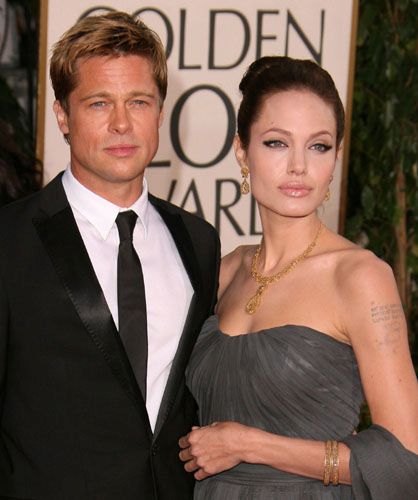
If I ask the famous Hollywood star Brad Pitt the same question then first of all people will think that I am from another planet who doesn’t know him but still I will not say "Comment tu t’appelles?" I will phrase the question in a very formal way.

Me: Comment vous vous appelez?

Brad Pitt: Je m’appelle Brad Pitt. Je suis acteur.

Me : Comment elle s’appelle ? (I point out to the beautiful lady beside him)

Brad Pitt : Elle s’appelle Angelina Jolie.

You must have guessed by now that ‘Elle’ is one of the French pronouns. What are the others?


Singular

Plural


First person

Je = I

Nous = We


Second person

Tu = You, Vous = You

Vous = You


Third person

il = He , Elle = She

Ils = They (masculine), Elles = They (feminine)


There are so many things to remember and learn so I am going to pause the Paris-Brest journey of Triple A. We will resume it very soon but by next time I would like you to revise all the lessons.

Thursday, October 28

Win a FREE trip to Paris!


Creative Polyglot is coming out of the shadow of Polyglutton and trying to find her way to Kingdom of France. How to find the way if you don’t know how to ask questions? We will continue our journey through the farm of questions to get back to Formidable France. In last lesson we learnt how to ask two questions:

Comment tu t’appelles? What’s your name?

Qui est-ce? Who is it?

A story of three friends in a college at Paris, Anita, Amrita and Amandine. Anita and Amandine know each other and Amrita will be their new friend. On first day of college Anita sees a lost girl, she goes over and introduces herself.

Bonjour, Je m’appelle Anita.

Comment tu t’appelles?

Bonjour, Je m’appelle Amrita.

Next day Amandine sees her best friend with a new girl.

Bonjour Anita!

Qui est-ce ?

C’est Amrita. (It is Amrita)

Bonjour Amrita!

Je m’appelle Amandine.

You observed one thing that they gave the password ,asked some questions and in return got a brand new friend. What is the password? It’s not only a password or ‘mot de passe’ as they call it in french to open a box of chocolates but to make friends too. Read the October 6th lesson and start making friends. Of course the story of these three friends doesn’t end here, it’s just the begining. And you are going to enjoy the ride.

Amrita is discovering Paris with her new friends. They are roaming around eating delicious Italian ice-cream. (You see Polyglutton is still trying to take hold of Polyglot, I have to be strong and not think too much of food.)

Amrita: Qu’est-ce que c’est?

Anita : C’est une cathédrale, la notre dame de Paris.

Amrita : C’est jolie.

After few minutes.

Amrita : Qu’est-ce que c’est?

Amandine : C’est l’arc de triomphe.

Amrita : C’est grand !

(I am really hoping that she doesn’t ask this question for Eiffel tower. Everybody knows the mighty tower? Dont’ you?)

Amrita: Qu’est-ce que c’est?

Anita : C’est un musée, le musée du Louvre.

Amrita : C’est beau.

Paris is quite big and I am really tired walking all over the city with these energy packed girls. I have to go and get an ice-cream or why not an Indian kulfi. Did you guess what was the question Amrita was repeating again and again? I am sure you did, if not then write me or I will give the answer in next lesson. If you are wondering what are these words Le, La and L’ then you can find the answer immediately in 15th October lesson. There are two more new prepositions ‘de’ and ‘du’ that we will discuss in next lesson.

Jolie = Beautiful, Pretty

Beau = Beautiful, Lovely

Grand = Big

Photo.1 'La notre dame de Paris' No doubt it is very beautiful

Wednesday, October 20

Ask some questions


I am watching 'Julie & Julia ' simultaneously while writing this post. I am absolutely in love with this film. I have already seen it 5-6times. Why? because I am connected to these ladies in some way. I live in France, love French cuisine and married to a very nice guy like them. One more common factor 'blogging' so let's start rolling this blog. You learn faster if you ask questions. It is true for anything, so be curious, ask QUESTIONS. After four years of fruitless attempts and experiments to teach an European an Indian language I finally had my first success. Of course that European is my husband and I am proud to tell that now he can speak few sentences of Hindi because I taught him to ask questions. We will do the same.


1. Bonjour!

Je m'appelle Creative Polyglot.

Comment tu t'appelles? (What's your name?)

Je m'appelle....................

( It's your turn to answer.)


Bonjour, Je m'appelle Julie.

Comment tu t'appelles?
Je m'appelle Julia.

2. Bonjour Julie!

Qui est-ce? (Who is it?) (की एस?)

C'est Julia. (It's Julia.)


Bonjour Julia!

Qui est-ce?

C'est Isabelle.


Keep asking questions!


Friday, October 15

Publish some articles first


Articles are very important in French because all things living or non-living have a gender and if you do not know which article to put you change everything. Boy becomes a girl and girl becomes boy, it's serious, isn't it? Don't worry! We will see what are the most important articles. I am giving the Hindi phonetics beside the French word for my Indian readers, I am also trying to upload an audio file so that you can hear and practice.

The articles are divided in two categories, definite and indefinite. The indefinite articles are Un एं(masculine singular ) ,Une इयून (feminine singular) and Des दे (Plural). The definite articles are Le ल (masculine singular), La ला (feminine singular), L' ( words starting with a vowel either of masculine or feminine gender) and Les ले (Plural).

Indefinite articles
1.Un café
2.Une révolution
3.Des cafés
Definite articles
1. Le mont Everest
2. La tour Eiffel
3. L'océan Atlantique
4. Les misérables (One of Victor Hugo's famous novels)

The difference between French indefinite articles 'Un,Une & Des' and definite articles ''Le, La, L' & Les ' is the same as between English 'a ' and 'The'. Un café could be any coffee shop but Le mont Everest because there is only one in this world. Send me a mail for more examples.
fig.1 The famous French daily newspaper 'Le Monde' ( The world)

Tuesday, October 12

Ready for an autograph?


Bonjour my French fans! Comment ça va? How to answer this question? Please check out the post on Friday 8th October. Those who are following regularly, they already know the answer. I hope you impressed people around you with these two simple but very powerful words ‘Bonjour’ and ‘Merci’. Let’s move one step ahead. Today we will learn how to introduce yourself. Watch out because you are going to meet some famous people here. Be ready to take autographs!


1. Bonjour!

Je m’appelle Kareena Kapoor.

Je suis actrice.

Je suis indienne.


2. Bonjour!

Je m’appelle Meryl Streep

Je suis actrice.

Je suis américaine.


3. Bonjour!

Je m’appelle Steve Martin

Je suis comédien

Je suis américain.


4. Bonjour!

Je m’appelle Thierry Henry.

Je suis footballeur.

Je suis français.


Did you understand? Isn’t it simple to learn by examples? I wish I could teach by French-French method but for that I need to interact with you. For now replace the name,profession and nationality of any one of the persons who introduced themselves above with your name,profession and nationality and voilà! Here you are transformed in français!

Send me a mail to get a list of nationalities in French and ask me for your profession too. I am waiting.

fig:1 I was there to watch the shooting of Pink Panther 2 at Eiffel tower, Paris but unfortunately it wasn't Steve Martin who did the stunt otherwise I would have dashed in to get an autograph.

Friday, October 8

Merci is as gentle as flowers


Do you still have the yummiest chocolate taste in your mouth and smell of fresh bread that stayed with you whole day along ? If no then go to a bakery one morning just to preserve that flavor in your mind and remember it everyday when you wake up, there is nothing else like that to start a nice day with. And then one day you will say to me ‘Merci’ . This is the next key word in any conversation. Bonjour is the key to open any door and Merci is the handle to close that door gently so that you may open it again without any problem next time. We learnt to open and close but what is in between? How to fill in that gap? Let’s see.

There is a parcel delivery for Madame Gerbaud, she opens the door and here is a small conversation between her and the mail man.


Bonjour , Madame Gerbaud. Comment ça va ?

Ça va bien. Merci.


Could you guess what was the dialogue? Just think for a minute and then I will give you the translation.


Exactly! This is it.


Good morning Mrs.Gerbaud. How are you?

I am fine. Thank you.


So you saw how we opened the conversation and then closed it, still it’s a tini-tiny dialogue. We will see later on how to complicate it, mean while you can practise these two sentences with your friends or family.

Wednesday, October 6

Say the password get the chocolates


When I arrived in France I got a cultural shock. We Indians are not used to see girls in bikini or in a swim suit on a beach nor to find a couple kissing in a public place or even at home in front of others but I was aware of these cultural shocks. The one I got was more of a cultural difference. We will begin our first lesson with it. The word I am going to tell you is the key to all the conversations and a password to enter any place or get your work done. Can you guess? Yes, you are right the word is Bonjour [bɔ̃ʒuʀ].

You dream that you are gliding on a wave of something sweet and fresh except it is not a dream. You get up with the smell of fresh bread from a near by french bakery. You go there say the password ‘Bonjour’ and you have the most delicious bread in your hands. You get ready, wait for the bus say Bonjour to bus driver and you are in, go to a chocolate shop say 'Bonjour' and you get the yummiest chocolates, go to a bank say Bonjour and you have your money (not always ;-) ). Everything starts with a ‘Bonjour’ in France, if you do not say it you are impolite. What is the next key word? Can you tell me?

Tuesday, October 5

French is fabulous


But I was wrong. I never enjoyed learning anything as much as I did while learning French. The journey to France was fabulous. In the beginning sometimes I wrote the pronunciations in Hindi, listened French Cds ,read a lot and even sang songs in French. That’s how I did not have to pay for lip-reading classes. :-) I fell in love with French (and later on with a French guy but that’s another story), so it is important when you learn a new language to be passionate about it otherwise it becomes a burden or a work to be finished. Please do not learn it just as a student, an employee or a tourist. Learn it as it is your passion and then you will discover the French beauty and joy. Tomorrow we will start the first lesson so do not forget to log on.

Fig.1: Magnificent Galerie Lafayette at Paris

Monday, October 4

French makes you feel hungry?


One thing was sure that French made all the students in the class including my professor very-very hungry. Yeah it was a morning class and nobody had time to eat breakfast at 6a.m but still how it’s possible that a language can make you feel hungry? well they ate half of the letters in each word! I mean they did not pronounce them. Sorry,I may be exaggerating a little bit but most of the time atleast 2-3 letters in the end of a word are never pronounced. My national language Hindi and mother tongue Marathi are phonetic languages that means we read as it is written, English is everywhere around us in India and we learn it since our childhood so it’s not a foreign language for us. I thought French is going to be a trouble.....................

P.S. In the photo gorgeous 'Apéritif Buffet' at our wedding.

Sunday, October 3

French is musical


I opened my text-book to see if I can read and understand something but then I was even more confused because there was no connection between what was written in letters and what fifteen people around me were blabbering. I opted for a morning class 7-9 a.m to start the day with a soft and sweet language atleast that was what I heard and read about French. It’s a very musical language which is quite true because I could hear only sounds in a rhythm but no words. Now I understood why music has no language........

Saturday, October 2

French is Fun


There are hundreds of French learning sites but often you have to pay after a free trial or simply they are very boring or complicated. Language learning should be fun like I had when I started my french lessons. My French adventure started at Alliance Française in my home-town in India where they don't use English or any other language to teach French. I was already late and had missed first 1-2 introductory classes when a lilttle bit English was allowed to begin the course but later on it was French, French and French everywhere. My face was as blank as a white sheet on my first day as strange alien words were whirling around my head trying to get in to my ears. I was staring at my professor and wondering if I have to take lip-reading classes simultaneously with French.....................